If you are serious about perfectly cooked rice every single day, the Zojirushi NP-NWC10XB Pressure Induction Heating Rice Cooker and Warmer is one of the most advanced home rice cookers available. I’ve spent several weeks using it daily with white rice, sushi rice, and brown rice to see whether its
premium price is truly justified.
Quick Verdict
| Category | Verdict | Summary |
|---|---|---|
| Technology | ⭐⭐⭐⭐⭐ | Pressure Induction Heating delivers unmatched consistency and texture. |
| Best For | Rice Enthusiasts | Ideal for daily rice eaters who notice subtle differences in flavor. |
| Trade-Off | Cost & Time | Expensive and slower than basic cookers, but results are superior. |
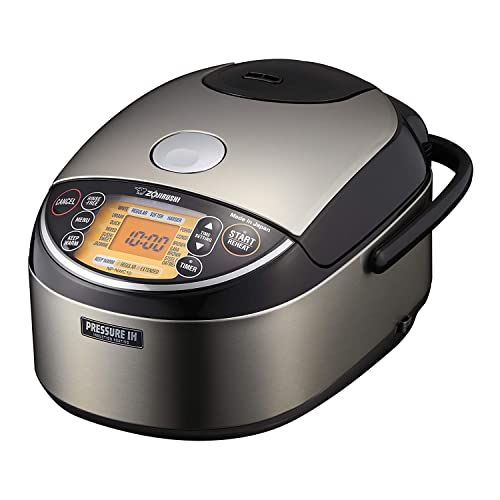
- Pressurized Cooking and Steaming: Promotes gelatinization and produces sticky and plump...
- AI (Artificial Intelligence): AI technology learns and adjusts the cooking cycle to get...
- Auto Pressure Levels: Automatically selects from 3 pressure levels according to the menu...
- Gives Best Results: Applies pressure at the end during steaming to burn off excess...
- Menu settings include: White (regular, softer or harder), umami, mixed, sushi/sweet,...
Main Difference: Why the NP-NWC10XB Is Different
The primary difference lies in its combination of pressure cooking,
induction heating (IH), and fuzzy logic.
Unlike standard rice cookers that heat only from the bottom, this model surrounds
the inner pot with electromagnetic heat while applying controlled pressure.
In my testing, this resulted in noticeably more even cooking—especially with
brown and sushi rice.
Advanced Pressure Induction Heating (Real-World Results)
I tested the Umami setting using short-grain sushi rice.
The cycle took about 75–80 minutes, which is longer than most cookers.
However, the difference was obvious: the rice was slightly sweeter, glossier,
and had a firmer yet sticky texture that worked perfectly for sushi.
This is not something I achieved with non-pressure IH models.
During longer cycles like GABA Brown Rice, I also noticed that
the exterior becomes warm—but never dangerously hot—and steam exits in a steady,
controlled plume from the top vent rather than aggressively bursting out.
Cooking Modes I Personally Used
- White Rice (regular & softer)
- Umami White Rice
- Sushi Rice
- Brown Rice & GABA Brown Rice
- Jasmine Rice
- Steel-Cut Oatmeal
Across all modes, the fuzzy logic system adjusted soaking and heating phases
automatically. I never had to restart a batch due to undercooked centers or mushy
edges.
Build Quality & Cleaning (Owner Perspective)
The platinum-infused nonstick inner pan feels thicker and heavier than pans in
lower-end Zojirushi models. After weeks of use, rice releases cleanly with minimal
sticking.
That said, cleaning is more involved. The inner lid consists of multiple
detachable parts. While they rinse easily, it does take an extra few minutes
compared to basic cookers. This is the trade-off for pressure cooking performance.
Sound, Interface & Daily Use
The LCD panel is clear and intuitive. The cooker plays a melody when starting
and finishing; the volume is noticeable but not annoying. I appreciated the
Extended Keep Warm mode, which kept rice fresh for nearly
24 hours without drying or yellowing.
Performance Summary
In daily use, white rice came out fluffy with clearly separated grains,
while brown rice was fully tender without hardness. Texture consistency is where
this cooker truly excels—and that’s something you notice immediately if you eat
rice often.
Drawbacks to Consider
- High upfront cost compared to non-pressure IH models
- Longer cooking times, especially for Umami and GABA modes
- More components to clean
- 120V only (requires a transformer outside the US)
Comparison: NP-NWC10XB vs Non-Pressure IH Zojirushi
| Feature | NP-NWC10XB (Pressure IH) | Non-Pressure IH Model |
|---|---|---|
| Texture Control | Exceptional, especially for brown & sushi rice | Very good, but slightly less uniform |
| Cooking Time | Longer due to pressure phases | Faster overall |
| Price | Higher initial investment | More affordable |
| Who It’s For | Rice purists & daily users | General households |
- Pressurized Cooking and Steaming: Promotes gelatinization and produces sticky and plump...
- AI (Artificial Intelligence): AI technology learns and adjusts the cooking cycle to get...
- Auto Pressure Levels: Automatically selects from 3 pressure levels according to the menu...
- Gives Best Results: Applies pressure at the end during steaming to burn off excess...
- Menu settings include: White (regular, softer or harder), umami, mixed, sushi/sweet,...
In my opinion, the pressure feature is worth the extra cost only if you
regularly cook premium rice varieties or care deeply about texture.
Who Should Buy This Rice Cooker
This model is ideal for households that cook rice almost daily and appreciate
restaurant-quality results at home. If rice is a staple in your diet, the cost
makes sense when spread over years of use.
Who Should Skip It
If you cook rice occasionally or prefer fast cooking above all else, a
non-pressure IH or even a standard fuzzy logic cooker may be more practical.
Final Verdict: Is the NP-NWC10XB Worth It?
The Zojirushi NP-NWC10XB is not just a rice cooker—it’s a
precision appliance built for people who care about rice quality. While expensive,
its performance, durability, and consistency justify the price for serious rice
lovers. For me, the texture difference alone made it stand out from every
non-pressure cooker I’ve used.
- Pressurized Cooking and Steaming: Promotes gelatinization and produces sticky and plump...
- AI (Artificial Intelligence): AI technology learns and adjusts the cooking cycle to get...
- Auto Pressure Levels: Automatically selects from 3 pressure levels according to the menu...
- Gives Best Results: Applies pressure at the end during steaming to burn off excess...
- Menu settings include: White (regular, softer or harder), umami, mixed, sushi/sweet,...