DCT451 vs. DCT651: Which Ninja Double Oven Actually Deserves Your Counter?
Best for Big Batches
Ninja DCT451 — deeper cavity, thermometer-based Smart Cook System, friendlier price.
Best for Hands-Off Precision
Ninja DCT651 — Pro Cook System with Auto Temp Detect and a shallower, counter-friendly body.
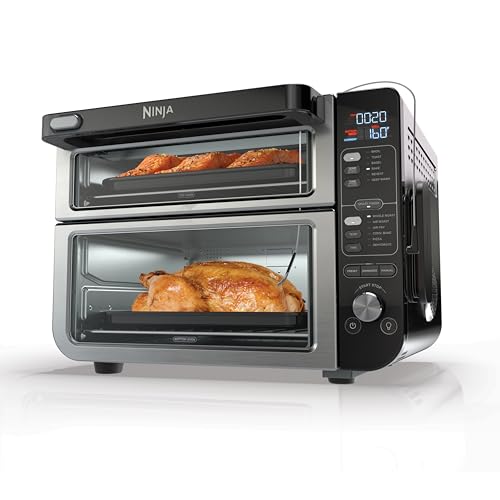
Cooking two dishes at two different temperatures used to mean juggling one oven and a lot of patience. Ninja's FlexDoor double ovens solve that by splitting a single countertop unit into two independent cooking zones, and the DCT451 and DCT651 are two of the most popular models in that lineup. On the surface they look nearly identical, both wrapped in stainless steel with FlexDoor access and FlavorSeal separation between the top and bottom cavities.
The main difference between the DCT451 and the DCT651 comes down to how each oven thinks. The DCT451 leans on a Smart Cook System built around a leave-in thermometer, so you dial in your own target temperature and let Smart Finish sync the two ovens to land together. The DCT651 swaps that for a Pro Cook System with Auto Temp Detect, letting you pick a protein and a doneness level while the oven handles the guesswork, all inside a noticeably shallower footprint.
Below, we break down specs, smart technology, capacity, build quality, and real-world cooking performance so you can decide which of these two ovens actually fits your kitchen and your cooking style.
Check Current Prices

Model Overview
Ninja DCT451
Smart Cook System · 12-in-1 · FlexDoor
A high-capacity double oven built around a leave-in smart thermometer. You set the target temperature, Smart Finish keeps both cavities in sync, and the deeper 21.5-inch body leaves plenty of room for large sheet pans and bigger cuts of meat.
Ninja DCT651
Pro Cook System · Auto Temp Detect · FlexDoor
The tech-forward sibling. Instead of setting a temperature yourself, you select a protein and doneness level and the Pro Cook System automates the rest, all inside a shallower 18.6-inch body that sits closer to the backsplash.
Full Specifications Comparison
| Feature | Ninja DCT451 | Ninja DCT651 |
|---|---|---|
| Series Name | Smart Double Oven | Double Stack XL Pro Cook |
| Cooking Intelligence | Smart Cook System | Pro Cook System with Auto Temp Detect |
| Included Thermometer | Leave-in smart thermometer | Pro-grade leave-in thermometer |
| Temperature Setup | Manual target temperature | Select protein & doneness level |
| FlexDoor Access | Yes — top-only or full double oven | Yes — top-only or full double oven |
| FlavorSeal Separation | Yes | Yes |
| Smart Finish Sync | Yes | Yes (DualZone-tuned) |
| Cooking Functions | 12-in-1 | 12-in-1 |
| Top Oven Best For | Toast, bagels, quick reheats | Toast, bagels, quick reheats |
| Bottom Oven Best For | Air fry, air roast, whole roast, bake | Air fry, air roast, whole roast, bake |
| Approx. Product Depth | 21.5 inches (deeper) | 18.6 inches (shallower) |
| Counter Fit | Best with deeper counters | Fits standard-depth counters |
| Exterior Finish | Stainless steel, wipe-clean | Stainless steel, wipe-clean |
| Crumb Tray | Removable, front-access | Removable, front-access |
| Toast Capacity | Up to 6 slices | Up to 6 slices |
| Best Suited For | Large households, big batches | Precision cooks, tighter counters |
| Typical Price Position | More accessible | Premium, "Pro" tier |
Smart Technology Compared
Both ovens include a leave-in thermometer and Smart Finish syncing, but the way they use that data is where the two models really split. The DCT451's Smart Cook System asks you to plug in the probe and dial a target internal temperature yourself — reliable once you know your numbers, but it puts the responsibility on the cook.
The DCT651's Pro Cook System removes that step. You choose a protein type and a doneness level from rare to well-done on the digital display, and Auto Temp Detect handles the target temperature in the background. It's a small interface change that makes a real difference on a busy weeknight, especially for anyone who doesn't want to look up safe internal temperatures every time.
Capacity & Batch Size
Both ovens are built for feeding a crowd, but the DCT451's extra depth translates into a bit more forgiving space for oversized sheet pans and whole birds, along with enough width for a standard 12-inch pizza in the bottom cavity. The DCT651 trims that depth for a more compact footprint while still handling a full-size roasting chicken and family-sized batches of wings in the bottom oven.
If your cooking routine regularly involves very large sheet pans, multiple racks of ribs, or feeding six-to-eight people at once, the DCT451's roomier cavity has a slight edge. If you're cooking for a smaller household and want the same functional range in a tighter space, the DCT651 doesn't give up much.
Design & Build Quality
Both units share the same FlexDoor mechanism — a single handle-mounted control that lets you open just the top oven for quick tasks or swing the whole door for full double-oven access. The build feels solid on both models, with a stainless steel shell that resists dents but does show fingerprints.
Where they diverge is footprint. The DCT451's extra depth can push right up against the edge of a standard counter, so measuring your space matters before buying. The DCT651 sits noticeably further back, which makes it feel more built-in and leaves more clearance in front for prep work.
Real-World Performance
In day-to-day use, the top "Rapid" oven on both models heats up in roughly a minute, making it a genuine toaster replacement for bagels and quick reheats. The bottom cavity is where the heavier lifting happens — air frying, roasting, and baking — and both models produce a crisp, evenly browned result on wings and roasted vegetables without needing a mid-cook flip.
The practical difference shows up when you're cooking something like a steak or a roast. With the DCT451, you're setting your own target and trusting the thermometer to alert you. With the DCT651, selecting "medium-rare" and walking away feels closer to hands-off automation, and the compact DualZone tuning in the bottom oven tends to produce slightly more consistent heat distribution in that shallower cavity.
Which One Fits Your Cooking Style
Big Family Dinners
Cooking for six or more regularly? The deeper DCT451 cavity gives you more room for large sheet pans and bigger cuts.
Pick: DCT451Weeknight Steak & Chicken
Want to press "medium-rare" and walk away? The DCT651's Auto Temp Detect takes the guesswork out of doneness.
Pick: DCT651Tight Counter Space
Standard-depth counters and a backsplash to work around favor the DCT651's shallower 18.6-inch body.
Pick: DCT651Budget-Conscious Upgrade
Want double-oven convenience without the "Pro" price tag? The DCT451 typically sits at a more accessible price point.
Pick: DCT451Batch Air Frying & Snacks
Both ovens handle multi-pound batches of wings well in the bottom cavity with crisp, even results.
Pick: TieBreakfast & Quick Reheats
Both top ovens heat in about a minute and toast up to six slices at once, so this one's a wash.
Pick: TiePros & Cons
Ninja DCT451
Pros
- Deeper cavity fits larger sheet pans and cuts
- Reliable thermometer-based Smart Cook System
- FlavorSeal genuinely keeps flavors from crossing
- Usually the more accessible price point
Cons
- 21.5-inch depth is a lot for small counters
- You need to know your own target temperatures
Ninja DCT651
Pros
- Selectable doneness levels feel foolproof
- Shallower body fits standard counters cleanly
- Auto Temp Detect adds real hands-off convenience
- Smart Finish syncs two very different meals well
Cons
- Carries a premium "Pro" price tag
- Slightly less depth for oversized pans
Final Verdict
The main difference between the DCT451 and the DCT651 isn't about raw cooking power — both use the same FlexDoor, FlavorSeal, and 12-in-1 foundation. It's about how much thinking you want to do and how much depth your counter can spare. The DCT451 rewards cooks who don't mind setting their own numbers and want maximum room to work with, at a friendlier price. The DCT651 is built for cooks who want the oven to make the doneness call for them, wrapped in a body that fits tighter kitchens more gracefully.
Our Pick
For most home cooks who want the smartest, most hands-off experience and a countertop-friendly footprint, the Ninja DCT651 is the stronger long-term buy. If you're cooking for a bigger household and want maximum capacity at a lower price, the Ninja DCT451 remains a dependable workhorse.
Which Should You Buy?
| If You Want... | Choose |
|---|---|
| Maximum cavity depth for big batches | Ninja DCT451 |
| Automated doneness selection | Ninja DCT651 |
| The more budget-friendly option | Ninja DCT451 |
| The shallowest footprint for tight counters | Ninja DCT651 |
| A dependable everyday double oven | Either model |
FAQ
What is the main difference between the DCT451 and DCT651?
The main difference between the DCT451 and the DCT651 is temperature intelligence and depth: the DCT451 uses a manual-target Smart Cook System, while the DCT651 uses an Auto Temp Detect Pro Cook System and sits in a shallower body.
Can both ovens cook two different meals at once?
Yes, both use FlexDoor and Smart Finish to run two cavities at different temperatures and finish them together.
Does FlavorSeal actually stop odors from mixing between ovens?
Both models keep the two cavities independently sealed and ventilated, which keeps aromas from crossing even with very different foods cooking at once.
Which model fits better on a small kitchen counter?
The DCT651's shallower body fits standard-depth counters more comfortably than the deeper DCT451.
Do I need to know exact cooking temperatures to use these ovens?
On the DCT451 you typically set your own target temperature. On the DCT651, you select a protein and doneness level and Auto Temp Detect manages the target for you.
How many functions do the DCT451 and DCT651 support?
Both are built around a similar 12-in-1 function set covering air frying, baking, broiling, roasting, toasting, and reheating.
Is the top oven useful on its own?
Yes, FlexDoor lets you open just the top compartment for quick tasks like toasting or reheating without running the full unit.
Which oven is easier to clean?
Both use a wipe-clean exterior and removable crumb trays. The more compact DCT651 can make reaching the back interior corners a bit easier.
Is the DCT651 worth the extra cost over the DCT451?
If automated doneness selection and a shallower footprint matter to you, yes. If you want maximum capacity at a lower price and don't mind setting temperatures yourself, the DCT451 is the better value.
See Today's Price